

Understanding IPTV Subscription: A Complete Beginner’s Guide
The first time I heard about an iptv subscription, it didn’t sound complicated, just different. Instead of cables or a dish outside the house, everything runs through the internet. That one change is what separates it from traditional TV.
An iptv subscription gives you more freedom than classic television ever did. You are no longer tied to one screen or one place. Content can follow you across devices, whether it’s a smart TV at home or a tablet when you are away. That flexibility is usually what pushes people to explore platforms like IPTV Near Me when they start comparing options.
What really defines an iptv subscription is control. You decide what to watch and when, without waiting for fixed schedules. Features like catch-up viewing and on-demand access are part of the normal experience, making internet-based television feel more personal and easier to live with.

How people usually figure out what IPTV really is
Most people don’t start with technical definitions. They start with a feeling. Regular TV feels restrictive, and that is where an iptv subscription quietly enters the picture. It is not about learning something new, it is about watching TV in a way that finally fits daily life.
What an IPTV subscription actually does (plain and simple)
Instead of long explanations, it helps to break it down clearly:
- An iptv subscription sends TV content through the internet, not cables or satellites.
- The content arrives as digital data and plays instantly on your device.
- No physical installation is needed beyond a stable internet connection.
Once you understand these points, the rest feels familiar.
Why the experience feels different from classic television
People usually notice a few changes right away:
- You are no longer tied to fixed schedules.
- Pausing, replaying, or catching up later feels normal.
- One iptv subscription works across multiple devices instead of a single TV.
This flexibility is often what pushes people to look closer at how subscriptions are structured, especially when comparing different pricing options before committing.
The main ways viewers use IPTV in real life
Not everyone watches the same way. Some viewers prefer live content as it happens. Others focus more on on-demand libraries and watch when time allows. Catch-up features sit quietly in the middle, useful when something is missed. An iptv subscription adapts to these habits instead of forcing one viewing style.
Why beginners usually feel comfortable fast
There is no steep learning curve. An iptv subscription does not require manuals or technical setups that scare people away. You open the app, browse naturally, and watch. After a short time, going back to rigid TV schedules starts to feel unnecessary.
When TV stops caring about the clock
One of the quiet reasons people stick with an iptv subscription is time freedom. Life gets busy, schedules collide, and fixed broadcast hours stop making sense. Time-shifted viewing fixes that problem without effort.
Here’s how people usually use it in real life:
- You miss a program, you simply watch it later.
- You pause live content, then continue when you are ready.
- You replay moments without needing to record anything manually.
This alone changes the relationship people have with television. An iptv subscription works around your day, not the opposite.
Small interactive details that make a big difference
What surprises many newcomers is how interactive an iptv subscription feels compared to old TV systems. These features are not flashy, they are practical:
- Simple guides that actually help you find content fast.
- Pause and rewind options that work even during live viewing.
- Extra content suggestions connected to what you are watching.
These touches make the experience feel smoother and more personal, which is often explained further in practical use cases like those shared in the Canada IPTV guide.
The technical side, explained without headaches
You do not need a complicated setup for an iptv subscription, but a few basics matter. Instead of long explanations, this table keeps it clear:
| Streaming quality | Comfortable internet speed |
|---|---|
| Standard viewing | Around 5 Mbps |
| High definition | Around 25 Mbps |
| Ultra-high quality | Around 50 Mbps |
A stable connection matters more than raw speed. Whenever possible, a wired connection feels noticeably smoother than unstable Wi-Fi.
Devices people actually use every day
The strength of an iptv subscription is how easily it adapts to different screens. Most viewers switch between devices depending on the moment:
- Smart TVs for relaxed home viewing.
- Android devices for flexibility and mobility.
- Tablets or phones when convenience matters more than size.
There is no single correct setup. The experience stays consistent, regardless of the screen, which is exactly why many users stop worrying about compatibility once they get started.
Best IPTV providers by region (quick overview)
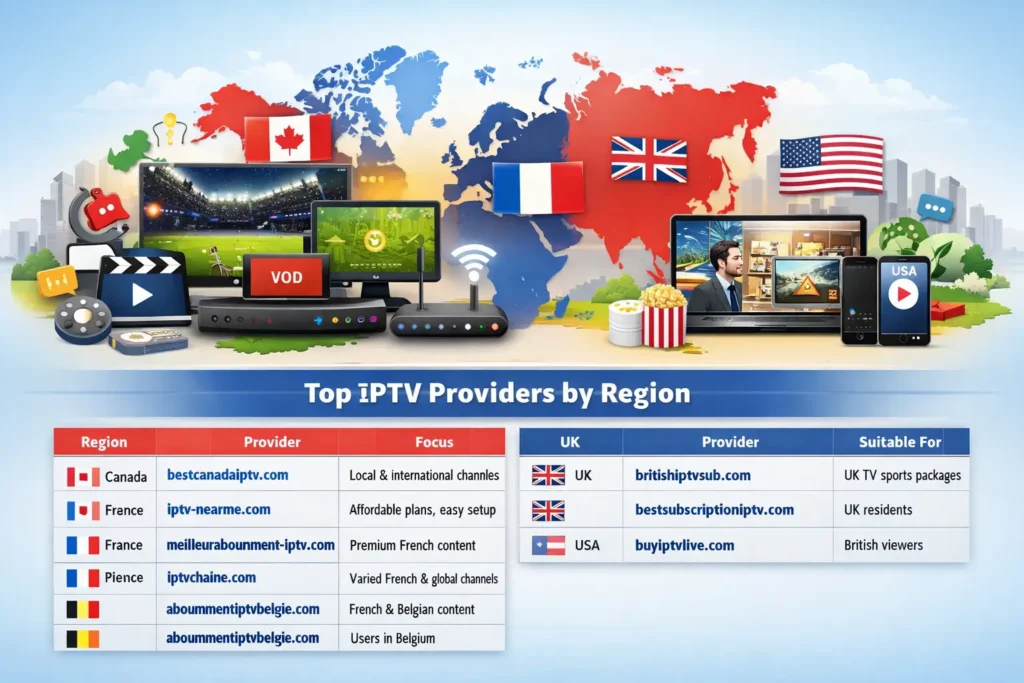
After readers understand how an iptv subscription works, most of them want one thing, a clear overview without digging through dozens of pages. That is exactly why this section works best in the middle of the article, right after the technical and usage explanations.
Below is a simple, readable table that groups providers by region, with practical details instead of marketing noise.
| Region | Website | Focus & usage style | Suitable for |
|---|---|---|---|
| Canada | Best Canada IPTV | Canada-focused access, stable usage, multi-device friendly | Users looking for local compatibility |
| Canada | IPTV Near Me | Flexible plans, works across many devices | Beginners and regular viewers |
| France | Meilleur Abonnement IPTV | French-language experience, simple navigation | French-speaking households |
| France | IPTV Chaine | Broad content coverage, easy setup | Users wanting variety without complexity |
| France / Belgium | Abonnement IPTV Belgique | Regional compatibility, flexible usage | Cross-border French-speaking users |
| United Kingdom | British IPTV Sub | UK-oriented usage, smooth live viewing | Viewers focused on UK content |
| United Kingdom | Best Subscription IPTV | Multi-device support, adaptable setup | Users who switch between devices |
| United States | Buy IPTV Live | General US access, device flexibility | US-based users and travelers |
This table is not meant to rank services or push decisions. It simply helps readers match an iptv subscription to their region and habits without overthinking. Most users end up choosing based on stability, language comfort, and how well the service fits daily life.

Watching IPTV on mobile devices without overthinking it
Using an iptv subscription on a phone or tablet feels natural once you try it. On iOS devices like iPhones and iPads, people usually install an IPTV app, enter their subscription details, and start watching. There is nothing complicated about it. The experience stays smooth, especially when switching between Wi‑Fi and mobile networks, which makes short viewing sessions surprisingly practical.
Firestick, Fire TV, and why people like them
Amazon devices are popular for a reason. A small Firestick plugged into a TV instantly turns it into an internet-based screen. With an iptv subscription, users often appreciate:
- Easy app installation directly on the device
- A clean interface that works well with a remote
- The ability to move the device from one TV to another
It is a simple setup that fits people who want IPTV without changing their entire home setup.
Using IPTV on computers and laptops
Some viewers prefer a bigger screen when they are not at home. An iptv subscription works well on computers, either through web platforms or dedicated applications. This option is often used during travel or work breaks, where convenience matters more than a traditional TV setup. It also helps people test services before settling on a main device, as explained in practical scenarios like those covered in the IPTV from Canada guide.
IPTV apps and players people actually use
Not all apps feel the same, and users usually notice quickly. Some players work across many systems, while others are designed for specific devices. When choosing an app for an iptv subscription, most people look for:
- A clean interface that does not feel cluttered
- Stable playback without constant buffering
- Support for guides, catch‑up features, and simple navigation
The right app often matters as much as the service itself.
A few technical terms that help everything make sense
Understanding a few basics can make an iptv subscription easier to manage:
- Playlists (M3U): files that organize channels and streams in one place
- Streaming quality: standard, high, or ultra‑high quality depending on your connection
- Device compatibility: how well your screen handles the stream you choose
Once these ideas are clear, IPTV stops feeling technical and starts feeling practical, which is usually when people become truly comfortable using it.

When streaming feels smooth and when it doesn’t
Anyone who has used an iptv subscription for a while notices one thing very fast, stability matters more than promises. When servers are stable, channels load quickly and streams play without interruptions. When they are not, buffering shows up and breaks the mood.
Most buffering issues usually come from one of two places:
- Overloaded servers trying to handle too many viewers at once
- An unstable or slow internet connection on the user’s side
This is why experienced users pay attention to reliability first, before anything else. It is also a topic often discussed when people compare real-world experiences in articles like this reliable IPTV service breakdown.
Why the program guide still matters
Even with all the flexibility an iptv subscription offers, people still like structure. That is where the electronic program guide comes in. It quietly helps you:
- See what is playing now and later
- Plan viewing without guessing
- Jump between programs without confusion
A good guide does not feel intrusive. It simply makes navigation feel familiar, especially for users coming from traditional TV.
A few terms that make IPTV easier to understand
Instead of long explanations, this table keeps things clear and practical:
| Term | What it means in daily use |
|---|---|
| M3U file | A simple list that organizes channels and streams |
| SD / HD / 4K | Different viewing qualities based on speed and screen |
| Server stability | How reliable the stream feels over time |
| EPG | A guide that shows program schedules |
Once these terms are familiar, managing an iptv subscription becomes much less confusing.
What people genuinely like about IPTV
There are reasons why many viewers switch and stay:
- Flexible pricing compared to classic TV packages
- Access to content across multiple devices
- Viewing that adapts to personal schedules, not fixed ones
For many households, this balance feels more realistic than traditional setups.
Where IPTV still has limits
No system is perfect. An iptv subscription depends heavily on internet quality. If the connection is unstable, the experience suffers. Server performance also matters, especially during peak hours. These limitations do not cancel the benefits, but they are worth understanding before fully switching.
A quick note on legality for Canadian users
The technology behind an iptv subscription is legal. What matters is how it is used. Canadian users should always be aware of where content comes from and choose services that operate responsibly. Understanding this distinction helps avoid confusion and keeps the experience worry-free.
IPTV compared to traditional TV at a glance
| Aspect | IPTV | Cable or satellite |
|---|---|---|
| Cost | Flexible plans | Often fixed and higher |
| Access | Works on many devices | Usually tied to one TV |
| Flexibility | On-demand and catch-up | Schedule-based viewing |
For many viewers, this comparison explains why an iptv subscription feels like a natural step forward rather than a risky change.
So, is an IPTV subscription actually a good fit?
At the end of the day, deciding if an iptv subscription fits you comes down to how you really watch TV. Not how you think you should watch it, but how you actually do. If your habits are scattered, different screens, different times, missed programs, then an iptv subscription usually feels like a relief rather than a change.
What makes an iptv subscription appealing is not one single feature. It is the combination. You are no longer chasing schedules. You are no longer tied to one device. With a stable internet connection and compatible screens, watching becomes flexible, calm, and far less frustrating than traditional setups.
For people starting out, especially beginners, it helps to be honest about limitations. An iptv subscription depends heavily on your internet quality. If the connection struggles, the experience struggles too. That is why understanding requirements early and choosing services carefully matters. Many users take time to review details or ask questions through pages like the contact section before committing.
When everything is balanced, connection, devices, and expectations, an iptv subscription often becomes the preferred option. Not because it is perfect, but because it adapts better to real life. And that is usually what keeps people using it long term.
Questions people usually ask before deciding
What exactly is an IPTV subscription?
An iptv subscription is a way to watch television through the internet instead of cable or satellite. Content streams directly to your device and adapts to your viewing habits.
How does IPTV actually work in practice?
Content is sent as digital data over your internet connection and rebuilt instantly on your screen. That is why a stable connection matters more than physical installation.
Why do people switch from traditional TV?
Most switch because of flexibility. An iptv subscription allows watching on multiple devices, on demand, and without rigid schedules.
What do I really need to use IPTV properly?
A stable internet connection, compatible devices, and a basic understanding of streaming quality. Nothing more complex than that.
Is IPTV legal in Canada?
The technology itself is legal. What matters is choosing services that operate responsibly and respect distribution rights.
Can live TV still be watched?
Yes. Most iptv subscription setups include live viewing alongside on-demand and catch-up options.
Which devices usually work best?
Smart TVs, mobile devices, streaming sticks, and computers all work well. The experience stays consistent across screens.
DMCA Disclaimer
This website does not host, store, or control any video streams, channels, or media files. All content discussed is for informational purposes only. We do not claim ownership of any external content, nor do we encourage the use of unauthorized or copyrighted material. Users are responsible for ensuring that any service they use complies with applicable laws and regulations in their region.
