

IPTV Prime: How It Works and Why It’s Gaining Attention in 2026
That one freeze that ruins everything
You know that moment… you finally sit down, remote in hand, ready to relax, and boom — the screen freezes. Not for long, maybe a few seconds, but enough to kill the vibe. That’s usually when people start questioning everything.
Lately, more viewers in Canada are moving toward iptv prime, hoping for something smoother, faster, and honestly… less frustrating. But here’s the thing, not every service delivers the same experience once you actually use it.
If you take a quick look at how modern platforms are presented on this IPTV homepage, everything looks perfect. Clean design, big promises, smooth branding. But real life isn’t a landing page.
A real iptv prime experience shows itself when you’re watching during peak hours, switching channels, or just trying to enjoy your evening without interruptions. And in 2026, that’s what people actually care about, not features, not numbers… just stability that works.

What really matters once you start using IPTV Prime
There’s a difference between what looks good… and what actually works every day.
After a few days of using iptv prime, most people realize one thing quickly: stability is everything.
- Smooth playback matters more than having thousands of channels
- Real performance shows up during peak hours, not during quick tests
- Network quality affects your experience as much as the provider
- Cheap services often fail when demand increases
- Testing in real conditions tells you more than any promise
What’s really happening behind IPTV Prime
If you’ve ever wondered why one channel plays perfectly while another buffers, it’s not random.
With iptv prime, everything is based on how data travels from a server to your device. Instead of traditional signals, content is sent in small data packets through your internet connection.
Your app rebuilds these packets instantly into a video stream. When everything is optimized, iptv prime feels smooth and responsive.
But if your connection drops or the server is overloaded, that’s when buffering appears.
Why some IPTV Prime services feel better than others
Not all infrastructures are equal.
A strong iptv prime setup uses optimized servers, better routing, and balanced traffic. That’s what keeps streams stable even when thousands of users are connected.
A weaker one? It struggles the moment traffic increases.
| What you notice | Basic setup | Optimized IPTV Prime |
|---|---|---|
| Server load | Overloaded | Balanced |
| Buffering | Frequent | Rare |
| Speed | Inconsistent | Stable |
| Experience | Frustrating | Smooth |
That difference is exactly what defines a good iptv prime experience.
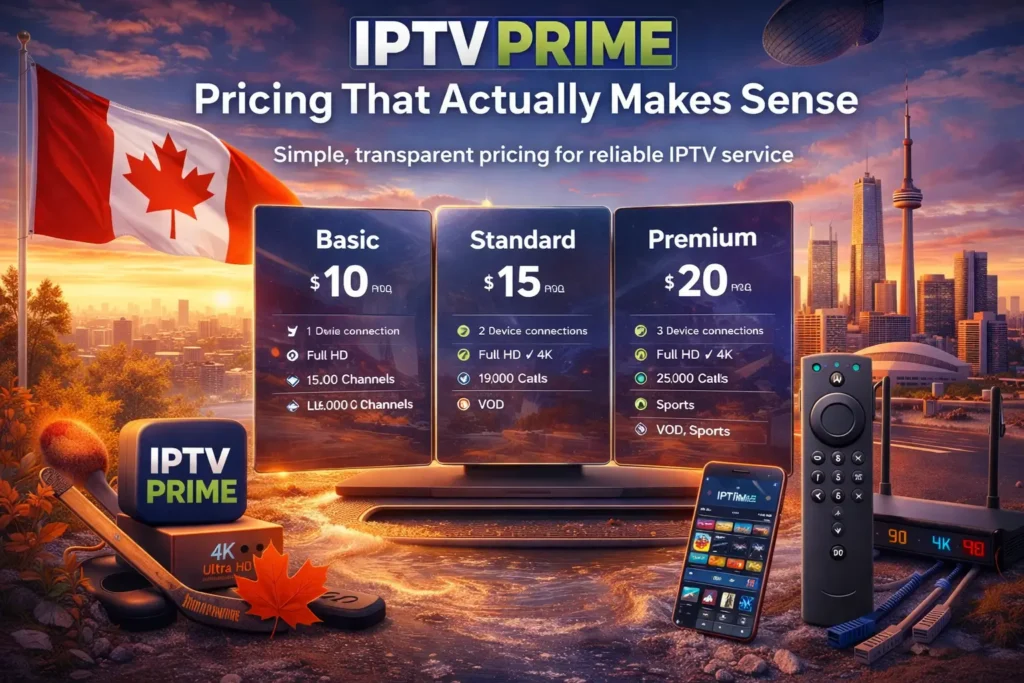
Pricing that actually makes sense
Let’s talk about something real… price.
People often look for the cheapest option, but with iptv prime, price only matters if performance matches.
Here’s the type of structure most users go for:
| Plan | Price |
|---|---|
| 1 Month | $10.99 |
| 3 Months | $23.99 |
| 6 Months | $34.99 |
| 12 Months | $49.99 |
You can explore how plans are structured here: IPTV pricing plans
A good iptv prime service isn’t just affordable… it’s consistent.
Getting IPTV Prime running on your devices
Setting up iptv prime is usually simpler than people expect.
On most devices, it comes down to:
- installing a compatible app
- entering your login or playlist
- letting everything sync
Once configured correctly, prime should run smoothly across:
- Smart TVs
- Firestick
- Android
- iOS
If it doesn’t feel smooth, the issue is often in the setup, not the service itself.
The small detail that changes everything
A lot of people forget this…
Your experience with prime depends on both the service AND your environment.
- stable internet
- updated apps
- correct device settings
When all of that is aligned, feels effortless.
And that’s the goal.
Not just watching… but watching without thinking about it.

Setting things up… without overcomplicating it
Most people think installing iptv is technical. It’s not. It’s just a few steps… but the way you do them changes everything.
On Firestick and Android (the most common setup)
Here’s how it usually goes when you install iptv:
- enable unknown sources (one-time step)
- download your player
- install and log in
That’s it.
But here’s the part people miss…
After login, take 30 seconds to clear cache and restart the app. This small move often makes iptv feel instantly smoother.
Apple devices and Smart TVs (cleaner experience)
On iOS or Smart TVs, things are simpler.
Search → install → login → done.
The interface of iptv prime usually adapts automatically, so you don’t need to tweak much.
But if your TV is older, don’t expect miracles. In that case, using a streaming stick gives iptv prime a much better performance boost.
The hidden factor nobody talks about
It’s not always the app. It’s your network.
A perfect iptv prime service can feel bad on a weak setup.
A few simple changes can fix most issues:
- use Ethernet instead of Wi-Fi when possible
- place your router in an open space
- avoid heavy downloads while streaming
These small adjustments can completely change how iptv prime performs.
What to check once everything is running
Don’t assume it’s working just because it opens.
Test your iptv prime properly:
- open different channels
- switch quickly between them
- stay on one stream for a few minutes
That’s how you see if your iptv is really stable.
If you want to understand how different setups affect performance across regions, this guide on IPTV usage in Canada gives a more practical overview.
The real test: quality under pressure
The moment of truth for iptv prime is not when you’re alone watching casually.
It’s when:
- traffic is high
- live content is running
- multiple users are connected
A strong iptv setup stays stable even then.
If it doesn’t… you’ll notice immediately.
And once you see that difference, it becomes very easy to tell which service is actually worth keeping.

When you really start noticing quality (not just watching)
At some point, you stop asking “does it work?” and start noticing how it works. That’s where iptv becomes interesting.
The moment you test real quality
Open a fast-moving scene, sports, action, anything dynamic. That’s where weak services break.
With a solid prime, the image stays sharp, colors remain deep, and nothing turns blurry when things move quickly.
If the quality drops every few seconds, your prime is struggling to keep up.
Evening hours… the real stress test
Forget morning tests. The real test for prime is at night.
When everyone is online, that’s when servers are pushed.
- if it stays smooth → good sign
- if buffering appears → weak infrastructure
A strong iptv should feel the same at 10 PM as it does at noon.
The interface tells you more than you think
People focus on channels… but the interface reveals everything.
During a real iptv session:
- menus should open instantly
- thumbnails should load fast
- switching should feel natural
If you feel delay while navigating, your iptv isn’t optimized properly.
Content organization (small detail, big impact)
A messy layout ruins everything.
A good prime service keeps things simple:
- categories are clear
- content is easy to find
- nothing feels overloaded
If you want to see how structured platforms present content properly, you can check this example of IPTV service organization and compare.
When problems appear (and how to react fast)
Even a good iptv can have occasional issues.
What matters is how easily you fix them.
- restart your app
- clear cache
- check your connection
Most of the time, these quick fixes bring your iptv back to normal.
The difference between “okay” and “perfect”
A normal service works.
A good prime feels invisible.
You don’t think about speed, quality, or loading… you just watch.
That’s the level you’re aiming for.
And once you experience that with iptv, anything less starts to feel slow.
Final thoughts before choosing
At some point, everything comes down to one simple question… does it actually work when you need it?
A good iptv service is not the one with the biggest promises, but the one that stays stable when you’re watching without interruptions. That’s what really defines the experience.
Before committing, take a step back and test your iptv properly. Use it at night, switch channels, explore content. That’s where the truth shows up.
If you’re still unsure or want direct answers before choosing, you can always reach out through this IPTV contact page and see how responsive the service is.
At the end of the day, choosing iptv is about confidence. When everything feels smooth, fast, and consistent… you already know you made the right decision.
FAQ
Is IPTV Prime easy to install?
Yes, setting up iptv usually takes just a few minutes. Install an app, enter your credentials, and your channels will load instantly.
Can IPTV Prime run smoothly in 4K?
A well-optimized iptv prime setup supports 4K streaming, but it depends on your internet stability and device performance.
Does IPTV Prime work on all devices?
Most of the time, yes. iptv prime works on Smart TVs, Firestick, Android, and iOS, as long as you use a compatible app.
Why should I test IPTV Prime before subscribing?
Testing iptv prime lets you see real performance, not just promises. It helps you avoid unstable services before paying.
What causes buffering on IPTV Prime?
Buffering on iptv usually comes from network issues, overloaded servers, or incorrect setup.
DMCA Disclaimer
This website does not host or store any media content on its servers. All content accessed through IPTV services is provided by third parties. We do not control or verify the legality of external streams. Users are responsible for ensuring that their usage complies with local laws and regulations.
We do not encourage or promote any form of copyright infringement. All trademarks and copyrights belong to their respective owners.
